Humanitarian Logistics: Delivering Aid Efficiently During Global Crises
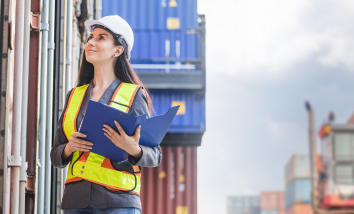
When disaster strikes, whether a devastating earthquake, a catastrophic flood, a conflict-driven refugee crisis, or a global pandemic, the world's first instinct is to help. Governments mobilise, charities fundraise, and communities donate. But all of that goodwill counts for very little if the food, medicine, shelter, and water cannot physically reach the people who need it most.
This is where humanitarian logistics becomes not merely a technical discipline, but a matter of life and death.
Emergency logistics in the context of disaster response is one of the most demanding, complex, and mission-critical forms of supply chain management in existence. Unlike commercial freight, where delays cost money, delays in aid transportation cost lives. Unlike standard shipping, where routes are predictable and infrastructure is intact, relief logistics must often operate in environments where roads are washed away, airports are damaged, ports are inaccessible, and security conditions are deteriorating by the hour.
At Insignia Shipping, we understand that logistics is the backbone of everything. In this article, we explore how the humanitarian supply chain works, the challenges that make it so uniquely difficult, and the innovations and strategies that are making aid delivery solutions more effective than ever before.
Humanitarian logistics encompasses the entire process of planning, implementing, and controlling the efficient flow of goods, services, and information from point of origin to the affected population during a crisis. It sits at the intersection of supply chain management, emergency response, and international development.
The term was formally defined by the Fritz Institute as "the process of planning, implementing and controlling the efficient, cost-effective flow and storage of goods and materials, as well as related information, from point of origin to point of consumption for the purpose of meeting the end beneficiary's requirements."
In practical terms, humanitarian logistics covers:
This is the machinery of mercy, and it must function under the most extreme conditions imaginable.
To appreciate the complexity of emergency logistics, consider the scale at which major humanitarian operations function. The United Nations World Food Programme (WFP), the world's largest humanitarian organisation, operates in over 80 countries simultaneously, delivering food and nutritional assistance to more than 100 million people in a single year. Its logistics arm, the Global Logistics Cluster, coordinates disaster relief supply chains on behalf of the entire humanitarian community during major emergencies.
Yet even with this scale and experience, the challenges are immense. The 2010 Haiti earthquake killed over 230,000 people and left 1.5 million homeless. The country's main port was badly damaged, its airport overwhelmed, and its road network fractured. Thousands of tonnes of donated supplies sat on runways and in holding areas whilst coordination failures, infrastructure collapse, and security concerns slowed distribution.
More recently, the conflict in Ukraine triggered one of the largest and fastest-growing humanitarian supply chain responses in Europe since the Second World War, demanding extraordinary levels of coordination between dozens of governments, hundreds of NGOs, and countless commercial logistics providers.
These examples illustrate a fundamental truth: in humanitarian crises, crisis logistics management is often the binding constraint. The bottleneck is rarely a shortage of goodwill or even resources — it is the physical and organisational challenge of moving the right goods to the right people at the right time.
Natural disasters offer little warning. An earthquake strikes without notice; a cyclone may give 24 to 48 hours at best. Emergency response logistics must be capable of mobilising almost instantaneously, drawing on pre-positioned stocks, standby logistics agreements, and rapid deployment mechanisms. This requires significant investment in preparedness long before any crisis occurs.
Floods destroy roads. Earthquakes collapse bridges. Conflicts render ports dangerous or unusable. Disaster recovery transportation must adapt in real time to infrastructure that may be partially or wholly non-functional. This often means switching between modalities using helicopters where roads are impassable, barges where bridges are down, or donkeys and porters in the most remote terrain.
Even in the midst of catastrophe, goods crossing international borders must go through customs procedures. Delays at borders caused by paperwork, duties, inspection requirements, or simple bureaucratic inertia can hold up life-saving supplies for days or even weeks. Experienced humanitarian logistics teams work proactively with host governments to secure customs waivers, pre-clearance arrangements, and expedited processing. However, this requires relationships and expertise built well in advance.
A major humanitarian response may involve dozens of UN agencies, hundreds of international and national NGOs, multiple government donors, the host country government, military assets, and commercial logistics providers all operating simultaneously, often with different mandates, systems, and priorities. Coordinating this ecosystem without a single controlling authority is one of the defining challenges of crisis logistics management.
The UN Cluster System, established after the Haiti and Pakistan crises, attempts to address this by creating sector-specific coordination bodies, including a dedicated Logistics Cluster but coordination failures remain a persistent feature of large-scale responses.
In conflict-affected settings, humanitarian workers and their supply convoys face genuine physical danger. Negotiating access, managing security protocols, and maintaining the neutrality and independence of aid transportation operations is a constant challenge. In some contexts, Syria, Yemen, South Sudan, aid delivery has become effectively weaponised, with supply routes deliberately blocked or attacked.
Getting supplies from a major hub or port to a remote village, a flooded valley, or a besieged urban neighbourhood is often the hardest part of the entire disaster relief supply chain. Last-mile infrastructure is typically the weakest, the most damaged, and the least served by commercial logistics networks. Solutions range from community-based distribution networks to drone delivery in pilot programmes in countries such as Rwanda and Malawi.
Despite these challenges, the field of humanitarian logistics has made extraordinary advances in recent years, driven by technology, data, and an increasingly professionalised approach to relief logistics.
Leading humanitarian organisations now maintain pre-positioned stockpiles of essential relief items at strategic hubs around the world in Dubai, Panama, Accra, Kuala Lumpur, and elsewhere. When a crisis strikes, these stocks can be airlifted or shipped within hours, dramatically reducing the time between disaster and delivery. The United Nations Humanitarian Response Depot (UNHRD) network is one of the most advanced examples of this model.
Modern humanitarian supply chain operations increasingly use sophisticated digital tools, enterprise resource planning (ERP) systems, real-time tracking platforms, and data dashboards to manage inventory, coordinate procurement, and track shipments across complex multi-country pipelines. Organisations such as WFP have invested heavily in supply chain digitalisation, giving field teams and headquarters alike unprecedented visibility into the movement of goods.
One of the most significant shifts in aid delivery solutions over the past decade has been the move towards cash and voucher assistance (CVA) rather than in-kind commodity distribution. Instead of shipping tonnes of food across the world, agencies give beneficiaries cash or electronic vouchers to purchase goods in local markets stimulating local economies, reducing logistical complexity, and giving people more dignity and choice. Whilst CVA does not eliminate the need for emergency logistics, it fundamentally changes its nature.
In areas where ground access is extremely difficult, unmanned aerial vehicles (UAVs), drones, are increasingly being used to deliver blood products, vaccines, and other medical supplies. Zipline, a US-based company, operates drone delivery networks in Rwanda, Ghana, and Nigeria, making millions of deliveries to remote health facilities. As technology matures and regulatory frameworks develop, drone logistics will play an increasingly important role in disaster recovery transportation.
Blockchain technology is being piloted in several humanitarian contexts to improve transparency and accountability in supply chains, tracking the provenance of goods, verifying distributions, and reducing the risk of fraud or diversion. Whilst still at an early stage, these applications hold significant promise for strengthening trust in humanitarian logistics systems.
AI-powered demand forecasting tools are helping humanitarian planners anticipate needs before a crisis fully unfolds using data on weather patterns, conflict indicators, displacement trends, and historical consumption to pre-position supplies and pre-arrange transport capacity. This shift from reactive to predictive crisis logistics management has the potential to save both time and lives.
One of the less discussed but critically important dimensions of humanitarian logistics is the role played by commercial freight and logistics companies. Large-scale humanitarian operations cannot be delivered by NGOs and UN agencies alone; they depend heavily on commercial carriers, freight forwarders, customs agents, port operators, and transport companies to move the vast majority of relief supplies.
This creates both opportunities and responsibilities for the commercial logistics sector. Companies with genuine global reach, deep expertise in international shipping, and established relationships with customs authorities and port operators are exceptionally well-placed to support humanitarian operations whether through commercial contracts, standby arrangements, or corporate social responsibility initiatives.
At Insignia Shipping, we recognise this responsibility. Our experience across complex international freight environments means we are equipped to support time-critical, high-stakes logistics operations whether that means navigating difficult customs environments, sourcing emergency freight capacity, or coordinating multi-modal transport solutions under pressure.
The lessons of decades of humanitarian response have converged on a set of principles that define best practice in relief logistics:
Invest in preparedness, not just response. The most effective emergency logistics systems are built before crises, not during them. Pre-positioning, standby agreements, trained personnel, and tested coordination mechanisms all require sustained investment in quiet times.
Localise where possible. International supply chains are slow and expensive. Building the capacity of local suppliers, transporters, and responders reduces dependence on international pipelines and speeds up the last mile of aid transportation.
Coordinate ruthlessly. Duplication wastes resources: gaps cost lives. Effective crisis logistics management requires disciplined coordination mechanisms that bring all stakeholders into a shared operational picture.
Embrace technology, but don't depend on it. Digital tools dramatically improve efficiency and visibility, but they fail in power cuts, in conflict zones with no connectivity, and in contexts where literacy is low. Robust analogue backup systems remain essential.
Measure and learn. The humanitarian sector has historically been poor at systematic learning and accountability. Improving data collection, sharing lessons across organisation’s, and holding operations to rigorous standards are all essential to raising the overall quality of disaster relief supply chains.
Humanitarian logistics may not make headlines the way that dramatic rescues or large donations do, but it is the quiet, essential engine that determines whether aid actually reaches the people who need it. Every pallet of food, every shipment of medicine, every container of shelter materials that arrives at a disaster site is the product of an extraordinary chain of human effort, professional expertise, and operational coordination.
As crises become more frequent and more complex, driven by climate change, geopolitical instability, and growing urban vulnerability, the demands on emergency response logistics will only intensify. Meeting those demands requires investment, innovation, and a commitment to treating logistics not as an afterthought but as the core of effective humanitarian action.
Whether you are a humanitarian organisation seeking a reliable freight partner, or a business looking to understand the logistics of crisis response, Insignia Shipping brings the expertise, the networks, and the commitment to help you move what matters, when it matters most.
UK freeport developments in 2026 are reshaping shipping routes, port operations, and trade logistics. Learn how they affect your supply chain.
Read More
See how geopolitical tensions are disrupting shipping routes, from the Red Sea crisis to new trade lanes, and how businesses can build resilience.
Read More
Crew change and vessel husbandry services are under increasing pressure at UK ports. Discover why vessel support is more critical than ever in 2026
Read More