UK Freeport Developments in 2026: What They Mean for Shipping and Trade
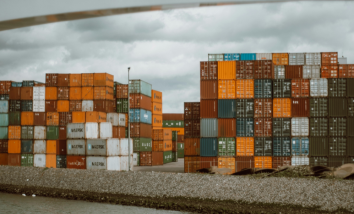
The UK freeport programme has moved well beyond its launch phase. In 2026, all eight English freeports are operational, two Scottish Green Freeports are active, and Wales and Northern Ireland have added further designated zones. For businesses involved in shipping, freight forwarding, and port operations, the practical question is no longer whether freeports matter. The question is how to position your supply chain to benefit from them.
A UK freeport is a designated customs and tax zone built around a port, airport, or logistics hub. Goods entering a freeport from overseas are not subject to standard UK import tariffs while they remain within the zone. Tariffs only apply if goods move into the domestic UK market. Goods destined for re-export leave the zone without any import duty applied.
The UK freeport model goes beyond customs benefits. Each zone offers a package of tax incentives, including enhanced capital allowances on plant and machinery, a 10% annual structures and buildings allowance for qualifying expenditure, national insurance contribution relief for new employees, and up to 100% business rates relief for five years. These incentives are specifically designed to attract new manufacturing, processing, and logistics operations that would not otherwise locate in the UK.
The March 2021 Budget designated eight freeports across England. Seven are centred on seaports: Teesside, Thames, Solent, Liverpool City Region, Humber, Plymouth and South Devon, and Freeport East covering Felixstowe and Harwich. The eighth is built around East Midlands Airport.
By September 2023, seven of the eight English freeports had reached operational status. In 2026, activity has accelerated across multiple sites:
Teesside Freeport covers 4,500 acres across Teesport, the Port of Middlesbrough, the Port of Hartlepool, Redcar Bulk Terminal, and Teesside International Airport. The declared investment pipeline has reached £17.9 billion with 6,465 projected jobs. In February 2026, a 22-company Japanese trade delegation visited the site, focusing on clean energy and net zero investment opportunities. A separate shortlisting for a £200 million battery energy storage facility is under active consideration.
Thames Freeport is a partnership between DP World, Forth Ports, and Ford. It operates across London Gateway and the Port of Tilbury, handling 40 million tonnes of cargo annually. The two ports connect to more than 125 overseas ports, with London Gateway described as the UK's most integrated logistics hub. Over £4.5 billion in combined public and private investment is planned across the Thames Freeport, with 1,700 acres of development land available.
Freeport East at Felixstowe and Harwich has attracted international manufacturing tenants including Rux Energy from Australia, Bauder from Germany, and Assan Panel from Turkey, which is investing £45 million in a new factory at Gateway 14.
Solent Freeport is focused on maritime excellence and clean growth technology, leveraging Southampton's position as one of the UK's primary deep-sea container gateways alongside Felixstowe and London Gateway.
Humber Freeport has positioned itself around manufacturing and clean energy cargo, benefiting from its central geography on the east coast and growing offshore wind sector demand.
Scotland's two Green Freeports, Forth Green Freeport and Inverness and Cromarty Firth Green Freeport, add an environmental dimension to the standard freeport model. Both are operational and targeting offshore wind, hydrogen, and low-carbon manufacturing investment. Wales's Anglesey Freeport and the Celtic Freeport bring the total UK tally to twelve designated zones. This expanded network means shippers now have more strategic options for where goods enter, are processed, and exit the UK supply chain.
The impact on UK shipping and trade logistics is direct. Operators using freeport customs sites can store or process imported goods without triggering import duty until those goods move into domestic consumption. Duty deferral improves cash flow for importers holding inventory for processing or onward export. Tariff inversion is a further benefit: where a finished product carries a lower tariff rate than its component parts, processing within the freeport means the lower outbound tariff applies, reducing the total duty cost.
For shipping lines and freight forwarders, freeports create port-centric logistics clusters with co-located suppliers, advanced manufacturing tenants, and purpose-built warehousing. This shortens supply chains, reduces handling steps, and creates more efficient cargo flows between arrival and departure. The Humber, Thames, and Teesside zones each serve distinct cargo profiles: bulk and clean energy at the Humber, containerised trade at the Thames, and heavy industrial and offshore at Teesside.
UK port infrastructure is also strengthening around freeport locations. Over the past ten years, Thames Freeport partners have invested more than £2.5 billion in port and logistics infrastructure, with a further £3 billion planned. London Gateway's deep-water berths are built to handle the world's largest container vessels, connecting over 130 ports and 65 countries.
If your cargo moves through any of these corridors, understanding the customs site structure and the authorisation process for freeport operations is now a practical logistics consideration, not a future-planning exercise.
Freeport developments sit within a wider set of pressures and changes reshaping UK trade and logistics in 2026. The UK ETS Authority brought domestic maritime emissions within the UK Emissions Trading Scheme from July 2026, adding a new compliance layer for vessel operators on domestic routes. FuelEU Maritime regulations, in force since January 2025, apply to EU-linked voyages and are now a live issue for carriers trading between UK and European ports.
According to Logistics UK, the transition to net zero could require more than £1 trillion in additional investment in new fuels, ships, infrastructure, and supply chains by 2050. Operators that plan around these structural shifts, including positioning within freeport zones where green energy infrastructure is being developed, will be better placed than those reacting to compliance requirements late.
The UK port sector is also responding to digital border modernisation. Advance data submission, electronic manifest filing, and appointment-based terminal operations are now standard practice at major UK container ports. Freeport customs sites are integrated into this framework, with HMRC authorisation processes governing entry and exit declarations for all goods moving through the zones.
At Insignia Shipping, we support clients navigating UK customs clearance across all major UK ports, including those within freeport zones. Our ocean freight services cover the primary UK deep-sea gateways at Felixstowe, Southampton, and London Gateway, and our port agency services provide operational coordination at key UK ports. For cargo requiring close port-side management, our full port agency service handles everything from vessel clearance to documentation and terminal coordination.
UK freeport developments in 2026 present concrete, time-limited opportunities. Enhanced capital allowances and the 10% structures and buildings allowance apply to qualifying expenditure incurred before specific deadlines. Businesses that delay assessment of freeport relevance to their supply chain risk missing incentive windows that will not reopen.
The practical steps are straightforward. Identify whether your cargo type, trade lane, or processing activity aligns with a freeport location. Assess whether duty deferral, tariff inversion, or customs simplification would reduce your landed cost or cycle time. Determine whether co-locating operations within a freeport tax site would justify the incentives available.
Shippers, manufacturers, and logistics operators that treat freeports as a structural part of their UK trade strategy, rather than a government headline, will find genuine commercial benefit embedded in the programme.
What is a UK freeport? A UK freeport is a designated zone where imported goods are not subject to standard tariffs while remaining within the zone. Tariffs apply only if goods enter the domestic UK market.
How many UK freeports are operational in 2026? Twelve freeports are operational across the UK: eight in England, two Scottish Green Freeports, Anglesey Freeport in Wales, and the Celtic Freeport.
What customs benefits do UK freeports offer shippers? Shippers benefit from duty deferral, tariff inversion, and simplified customs procedures. Goods can be stored or processed within the zone without triggering import duty until they enter the domestic market.
Which UK ports are part of the freeport network? Key ports include Teesport, the Port of Tilbury, London Gateway, Felixstowe, Harwich, Southampton, Liverpool, and the Humber ports of Hull and Immingham.
Do UK freeport tax incentives have an expiry? Yes. Enhanced capital allowances on plant and machinery and the 10% structures and buildings allowance apply to qualifying expenditure incurred before specific Government-set deadlines. Early planning is essential to capture the full benefit.
UK freeports are no longer a policy in development. In 2026, they are operational trade infrastructure with confirmed investment pipelines, active manufacturing tenants, and growing cargo volumes. Teesside, Thames, the Humber, Freeport East, Solent, Liverpool, Plymouth, and East Midlands each serve distinct trade and industrial profiles. Scotland and Wales add further strategic depth to the network.
For anyone moving goods through UK ports, the freeport programme represents a structural shift in how port-centric logistics is organised in Britain. Understanding which zone is relevant to your trade lane, cargo type, and processing requirements is now part of competent supply chain management.
If you want guidance on routing cargo through UK freeport locations or support with UK customs clearance and port operations, contact Insignia Shipping to speak with our UK logistics team.

Discover how humanitarian logistics supports rapid disaster relief. Learn about aid delivery, supply chain challenges, and emergency response solutions.
Read More
See how geopolitical tensions are disrupting shipping routes, from the Red Sea crisis to new trade lanes, and how businesses can build resilience.
Read More
Crew change and vessel husbandry services are under increasing pressure at UK ports. Discover why vessel support is more critical than ever in 2026
Read More