Portland Port's LNG Ship-to-Ship Approval: What It Means For UK Marine Logistics
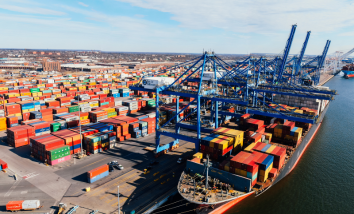
Portland Port's approval to conduct liquefied natural gas (LNG) ship-to-ship (STS) transfer operations marks a meaningful shift in the UK's marine bunkering infrastructure. As the shipping industry continues its slow but deliberate transition towards lower-emission fuels, the ability to conduct LNG transfers at a deep-water UK port adds a practical new option for vessel operators navigating tightening environmental regulations. For shipping companies, port agents, and marine logistics teams, this development deserves close attention.
The global shipping industry is under increasing regulatory pressure to reduce its environmental footprint. The International Maritime Organizations (IMO) strategy for decarbonising international shipping, which targets a reduction in total greenhouse gas emissions by at least 50% by 2050 compared to 2008 levels, is accelerating the adoption of alternative fuels across the sector. LNG has emerged as one of the most commercially viable transition fuels currently available — cleaner than heavy fuel oil (HFO), with established supply chains and a growing fleet of LNG-capable vessels.
Ship-to-ship LNG transfer — the process of transferring liquefied natural gas from one vessel to another, typically using a bunkering vessel alongside — has been established practice at several European ports for a number of years. Rotterdam, Zeebrugge, and ports across Scandinavia have built notable LNG bunkering infrastructure. Until recently, UK ports have lagged behind, with limited capacity to conduct LNG STS operations at scale.
Portland Port's approved capability changes that equation. Portland, situated on the Dorset coast with deep-water berths and an established record of supporting naval, commercial, and specialist marine operations, is now positioned to offer LNG STS services to vessel operators operating in and around UK waters.
According to industry reports, the regulatory approval process for LNG ship-to-ship operations in UK waters involves engagement with the Maritime and Coastguard Agency (MCA), the Health and Safety Executive (HSE), and the relevant port authority. Achieving that approval is not a straightforward administrative exercise — it requires detailed safety case submissions, emergency response planning, and operational protocols that meet internationally recognised standards.
For vessel operators running LNG-fuelled ships through the English Channel and into the North Sea — one of the world's busiest maritime corridors — the availability of LNG bunkering at Portland creates a strategically positioned UK option. Previously, vessels operating in UK waters often had to divert to continental European ports to bunker LNG, adding time, cost, and logistical complexity to their voyage planning.
The commercial implications are clear. Reduced deviation from planned routes means lower operational costs. It also means UK ports can compete more effectively for the growing fleet of LNG-powered vessels that major shipping lines are commissioning as they respond to IMO regulations and the EU's FuelEU Maritime regulation, which is expanding shipping's inclusion within the EU Emissions Trading System (ETS).
For freight operators, the medium-term consequence is that UK-routed voyages may become more competitive for LNG-capable vessels. Vessels that previously bypassed UK ports for bunkering purposes may now consider Portland as a viable call — which has broader implications for port revenue, cargo volumes, and the wider marine services ecosystem supporting those vessels.
LNG ship-to-ship operations introduce a distinct set of operational requirements that vessel operators and their port agents must plan for carefully.
Cryogenic cargo transfer demands highly trained personnel, specialised equipment, and rigorous safety management. Exclusion zones must be established during transfer operations. Emergency response plans must be in place and tested. The receiving vessel's LNG tanks and fuel management systems must be compatible with the transfer process. All of this requires detailed pre-arrival coordination between the vessel operator, the port, the bunkering supplier, and the port agent managing the call.
Scheduling is another challenge. LNG bunkering windows need to be carefully aligned with vessel arrival times, tidal conditions at Portland, and the availability of the bunkering vessel. Any misalignment in the timing chain can result in delays that cascade through voyage planning. In markets where vessels are operating on tight schedules — particularly container and RoRo services — bunker delay is not a minor inconvenience.
There are also crewing considerations. LNG bunkering operations require crew members certified in line with the IGF Code (the International Code of Safety for Ships Using Gases or Other Low-Flashpoint Fuels). Vessel operators must confirm crew competency before operations can proceed. Port agencies coordinating LNG bunkering calls need to be across all of these requirements, providing accurate pre-arrival notifications and liaising between all parties efficiently.
For vessel operators with LNG-fuelled ships calling at or near UK waters, the starting point is a detailed assessment of whether Portland should be incorporated into voyage bunkering plans. That assessment should cover route deviation savings, the cost and availability of LNG at Portland versus alternative supply points, and the operational readiness of the vessel and crew.
Port agents who support Portland calls need to familiarise themselves with LNG STS protocols and ensure they can provide accurate and timely pre-arrival information to the port authority and the bunkering supplier. Communication between all stakeholders must be precise — LNG bunkering is not an operation where vague or incomplete pre-arrival information is acceptable.
Shipping companies should also review their insurance arrangements. LNG bunkering operations may require specific endorsements or notifications to hull and machinery underwriters. P&I clubs have issued guidance on LNG STS risks, and operators should ensure their cover is aligned with the planned operations.
For logistics and operations managers, building LNG bunkering into voyage optimisation software — factoring in Portland as a supply point — will allow more accurate cost modelling for LNG-fuelled fleet operations in UK waters.
Coordinating a specialist marine operation such as an LNG ship-to-ship transfer requires port agency support that is technically informed, operationally precise, and able to manage multiple stakeholders simultaneously. Insignia Shipping provides port agency services that support complex vessel calls, including coordination of bunkering operations, pre-arrival notifications, liaison with port authorities, and on-the-ground support throughout a vessel's time in port.
Beyond bunkering coordination, Insignia Shipping also supports crew change logistics, ship chandlery, vessel husbandry, and marine operations support — all of which may be required by vessels making a Portland call to conduct LNG STS operations. For vessel operators planning calls at Portland or other UK ports, working with a port agent who understands both the regulatory environment and the practical coordination requirements makes a material difference to operational outcomes.
Portland Port's LNG ship-to-ship capability is a meaningful development for UK marine logistics. As the shipping industry accelerates its transition away from conventional bunker fuels, having a viable UK option for LNG transfer reduces deviation costs, supports voyage planning for LNG-fuelled fleets, and strengthens the UK's position in the European marine bunkering landscape. Vessel operators, shipping companies, and freight logistics teams should take note and assess what this means for their operations now.
Q1: What is LNG ship-to-ship transfer?
LNG STS transfer is the process of transferring liquefied natural gas from one vessel to another, typically using a dedicated bunkering vessel. It allows LNG-fuelled ships to receive fuel without needing to berth at a fixed LNG terminal.
Q2: Why is LNG gaining ground as a marine fuel?
LNG produces significantly lower sulphur oxide, nitrogen oxide, and particulate emissions compared to heavy fuel oil. It is currently one of the most commercially available alternative fuels capable of meeting IMO sulphur and GHG reduction targets.
Q3: What regulations govern LNG bunkering in UK waters?
LNG bunkering in UK waters is subject to oversight by the Maritime and Coastguard Agency (MCA) and the Health and Safety Executive (HSE), as well as compliance with the IMO's IGF Code and relevant port authority requirements.
Q4: Does my vessel's crew need special certification for LNG operations?
Yes. Crew involved in LNG bunkering must hold appropriate certification under the IGF Code, which sets out competency requirements for personnel on ships using gases or low-flashpoint fuels.
Q5: How does Portland Port's location benefit LNG bunkering for UK shipping?
Portland's deep-water berths and position on the English Channel make it strategically accessible for vessels operating in one of the world's busiest shipping lanes, reducing the need to divert to continental European ports for LNG supply.
UK freeport developments in 2026 are reshaping shipping routes, port operations, and trade logistics. Learn how they affect your supply chain.
Read More
Discover how humanitarian logistics supports rapid disaster relief. Learn about aid delivery, supply chain challenges, and emergency response solutions.
Read More
See how geopolitical tensions are disrupting shipping routes, from the Red Sea crisis to new trade lanes, and how businesses can build resilience.
Read More